


Perimenopause, Hormones, and the Rise of Sleep Anxiety — What's Actually Happening

Hormonal shifts change sleep architecture, temperature regulation, and internal sensitivity — often long before women realise what's happening. This article explains why sleep becomes lighter and more unpredictable during perimenopause, and why it's not your fault.
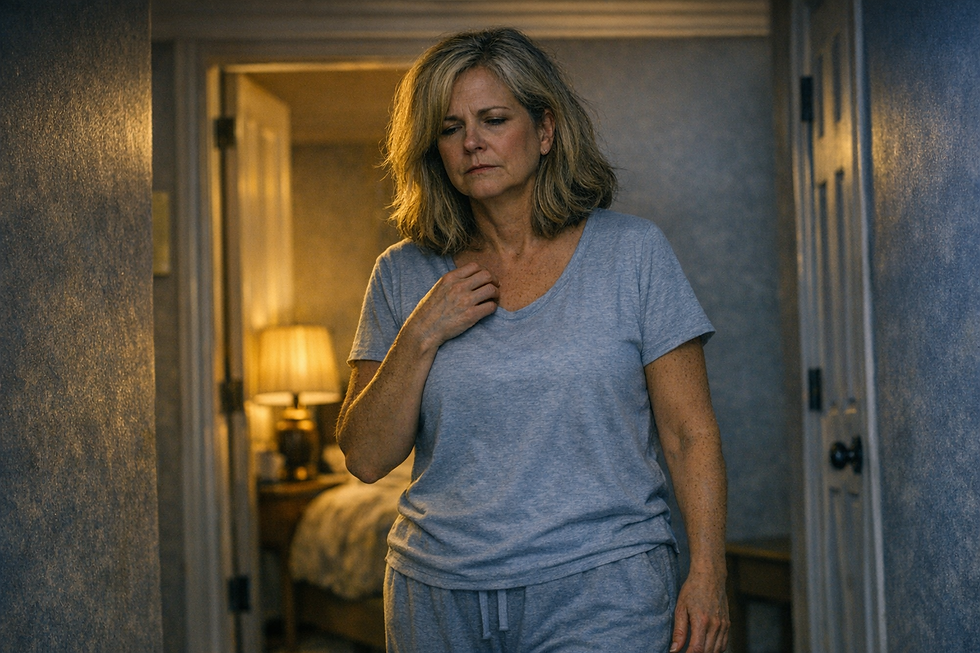
If your sleep changed in your late 30s, 40s, or 50s — and especially if you suddenly found yourself waking at 2am, feeling wired but exhausted, or dreading sleep in a way you never used to — you're not imagining it. Hormonal shifts can make sleep feel unpredictable. And unpredictability is exactly what fuels sleep anxiety. This isn't a personal failing. It's not a sign that you "can't cope." It's not even really about sleep. It's about your nervous system trying to make sense of a body that suddenly feels different.
Why Hormones Affect Sleep So Deeply
Perimenopause isn't just about periods changing. It's a full-body recalibration involving:
· fluctuating oestrogen
· shifting progesterone
· changes in cortisol patterns
· temperature swings
· increased sensitivity to stress
These changes don't break your sleep system — but they do make it more reactive.
Oestrogen Supports serotonin, temperature regulation, and deeper sleep. When it fluctuates, sleep becomes lighter and more fragile.
Progesterone Has a naturally calming effect. When levels drop, your internal "soothing system" becomes less reliable.
Cortisol Can spike at the wrong times during midlife, making early‑morning waking and nighttime alertness more common.
None of this means something is wrong with you. It means your internal landscape is shifting — and your nervous system is trying to keep up.
How Hormonal Changes Trigger Sleep Anxiety
Here's the part most women aren't told: Hormonal shifts don't just disrupt sleep. They disrupt predictability. And when sleep becomes unpredictable, your nervous system starts to anticipate difficulty. A few nights of:
· sudden wakefulness
· hot flushes
· racing heart
· early‑morning adrenaline
· feeling "off" in your own body
…can be enough for your system to think, "Sleep isn't safe anymore." Not consciously.
Not dramatically. Just a quiet, steady bracing. That bracing is the beginning of sleep anxiety.
Why This Feels So Much Bigger Than "Just Hormones"
Midlife is often full:
· ageing parents
· teenagers
· career pressure
· relationship shifts
· identity transitions
· physical changes that feel unfamiliar
Your nervous system is already carrying a lot. Add unpredictable sleep on top of that, and it's easy for the anxiety‑about‑not‑sleeping loop to take hold. This is why so many women say:
· "I've never struggled with sleep before — why now?"
· "I feel like my body has changed overnight."
· "I'm tired all day but wired at night."
· "I dread sleep and I don't know why."
It's not "just hormones." It's hormones + life + responsibility + pressure + exhaustion.
Sleep anxiety thrives in that combination — but it also responds beautifully to the right kind of support.
The Good News: This Isn't Permanent
Hormonal changes can make sleep feel chaotic, but they don't permanently damage your ability to sleep. Your sleep system is still intact. Your body still knows how to sleep. Your nervous system just needs help recalibrating. When the anxiety softens, sleep returns — even in the midst of hormonal change.
What Actually Helps
When sleep anxiety is part of the picture, the solution isn't:
· stricter routines
· more supplements
· more sleep hygiene
· forcing yourself to relax
· trying harder
Those things often add pressure — and pressure is the very thing that keeps you awake. What helps is support that:
· calms the threat response
· reduces hypervigilance
· rebuilds trust in your body
· addresses the anxiety directly in the body, at its source
· uses a body-mind approach that works with your nervous system, not against it
· acknowledges the hormonal landscape without catastrophising it
When your body feels safe again, sleep follows.
The Most Important Thing to Know
You're not losing your ability to sleep. You're not "too anxious." You're not failing at midlife. You're navigating a period of profound physiological change — and your nervous system is doing its best with the information it has. Once that information shifts, the anxiety shifts. And when the anxiety shifts, sleep comes back.
Ready to Find Out If This Is Right for You?
If you recognise yourself in these pages, if you've watched your sleep change in ways that feel confusing and out of your control, I'd love to talk.
Book a free discovery call and we'll look at what's driving your sleep anxiety and whether the programme is the right fit. No pressure, no pitch. Just clarity.


Comments